


Heading 6
October 9, 2026
By:
Britain Powers
Q&A with Bill McCamley, Author of Right My Dudes... Now What?

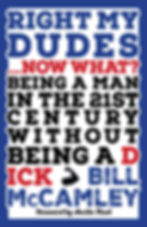
Book Description:
Right My Dudes... Now What? is a book for men navigating the uncomfortable intersection between the manosphere-MAGA worldview and left-wing spaces, speaking to those who feel alienated from both. It examines how disconnection and loneliness can lead men to dangerous addictions, economic problems, incarceration, and suicide, all while fueling the cultural and political rise of figures like Donald Trump. Written from both a political and educational perspective, this book offers remedies to these challenges through a raw, honest exploration on how masculinity can be expressed positively—without becoming an asshole.
Buy the book here.
Author Bio:
Bill McCamley spent over 20 years in various public offices that include County Commissioner, State Representative, and New Mexico Secretary of Labor. His experience is wide and deep, with roles in areas as diverse as transportation, economic development, workforce readiness, mental health, marijuana legalization, real estate development, t-shirt sales, and swing dancing instruction. He has degrees from New Mexico State University and Harvard University, and currently lives in Las Cruces, NM with his dog Cooper.
You talk about your motivations for writing Right My Dudes, but was there a specific moment or experience when you realized you actually had to sit down and write it? What was the turning point that moved it from an idea into something you started putting on the page?
I went to Washington in July of 2025 for a political work trip and met with folks on the left. I’ve never felt as unwanted in my entire life, and for a guy who spent his entire career trying to advocate for left-leaning policies (marriage equality, cannabis legalization, health care provision, progressive tax policy, job creation), it felt like a slap in the face.
I instantly knew why a ton of guys are feeling like they don’t have a place in left-leaning places (see Chapter 19) and why many young men turn to people like Tucker Carlson and Andrew Tate. This is a terrible option, but I absolutely understand it now.
The book is full of statistics that support your perspective and claims. Can you talk a bit about your process for gathering and selecting those statistics?
I have a Masters from Harvard, and through that academic experience learned it is critical for anyone with an argument to back up their statements by real facts and research. As we enter a new world of fake news, AI, and viral social media posts with tenuous connections to reality, it’s even more important for me to let readers know that I’m not just making shit up.
That’s why there are over 550 references here to places like data reports from trusted governmental agencies (CDC, Census Bureau, etc.), scientifically sound pollsters, and historical texts.
Accuracy matters.
It feels like the book is aimed primarily at young straight men grappling with today’s changing political and social culture. Were there other audiences you had in mind while writing it who you think could also benefit from the book?
The book can also be beneficial to older men who are navigating these new, strange, and constantly changing waters. After all, I’m almost 50 and the research helped me process things quite a bit. Additionally, any parent (including mothers) looking to understand what their sons are going through in life could benefit from the information here greatly.
You include interviews with men from a range of different backgrounds throughout the book. Why was it important for you to include those voices and perspectives alongside your own?
We are all the stars of our own soap operas, so we understandably judge things through our own experiential lens.
But to truly learn and grow, we all have to make an effort to see where other people are coming from.
To have the perspective of professional athletes, cops, teachers, nurses, social workers, and even a trans woman who was a Marine for 3 years when she identified as a man gives the kind of different viewpoint that we all need in order to truly get better as men.
The book focuses specifically on straight men’s experiences. What informed the decision to center that perspective, and how do you think queer perspectives might fit within the broader conversation?
Straight men, especially white ones like me, are in a very… weird place right now. For most years of human civilization, the rules of how we all live (voting, owning property and business, getting into school, etc.) have put a thumb on the scale to our advantage. But things are truly changing. Boys are dropping out of school at higher rates, are getting poorer grades, and are far less likely than women to get a 4-year degree. More of us are out of a job than ever, and young men are more than twice as likely to live at home as women.
This situation is leading to real feelings of loneliness, frustration, and anger. Men in general are almost 4 times as likely to die by suicide than women, and we are much more likely to be in prison, live on the street, and get addicted to and die because of bad drugs. 97% of mass shooters are men, with a frustratingly high number being those radicalized online.
This is real pain.
As a straight guy, it is really important for me to try and understand where my female and gay neighbors are coming from. AND, for queer men and women as well, it is just as important to understand where guys like me are coming from.
The only shot we have to make our communities kinder, more accepting, and just better is to truly put ourselves in the shoes of people who aren’t like us. I hope this book can give that necessary perspective in a deep, accurate, and respectful way.
You share your own experience with mental health and seeking help. What are your thoughts on the broader system—particularly the high cost of therapy and medication and limitations in insurance—that can make accessing care so difficult for many people?
It sucks. Hard.
Men in general tend to have this mindset that a strong guy solves problems himself. It’s why so many don’t go to the doctor for physical issues. The attitude is even more intense with mental health, because so many have this deeply embedded understanding that emotional expression makes you more “weak” and “womanlike”.
We have our work cut out in order to get over this crap, but a system that doesn’t actively recruit male therapists, creates roadblocks in terms of scheduling and cost, and doesn’t meet many guys where they are doesn’t help.
You mentioned that incentives like student-loan forgiveness could help encourage more men to enter fields like education and healthcare. What kinds of approaches or incentives do you think could similarly encourage more men to seek therapy and prioritize their own mental and physical healthcare?
I am actively working in this field right now through my role as Director of the NM Building Trades Wellness Coalition. Construction workers, along with miners, have the highest suicide and death by overdose rates in the country. These trades are also over 95% male, which is not a coincidence.
To truly make a dent in these terrible numbers, there are some concrete things we can do:
My friend Dr Dominick Shattuck has excellent advice on how to get more teenage boys comfortable seeing a doctor, integrate mental health services WITH more physical doctor visits, and make sure follow-ups are part of care.
Specific opportunities to let men with substance abuse or suicide experience talk to other men about these issues can give men “permission” to open up and ask for help.
Workplaces need to actively make it ok for men to talk about their issues, and be supportive of time off to deal with drug abuse or serious mental health issues.
There are programs to actively recruit women into the fields of STEM, business, and management. Similar ones should be started to support men in the HEAL (Health. Education, and Literacy) jobs. Men are more likely to get better from mental and emotional health issues when dealing with other men. A great example of this is the brand new Male Educators Network (M.E.N.) for teachers.
You describe modern Christian Nationalism as being driven more by power and identity than faith itself. Do you think this is a passing political moment, or something that will have a lasting influence on American culture and politics?
It is far from a passing political movement. Chapter 22 goes deep in showing how embedded in American society this type of worldview is historically. Hell, the Ku Klux Klan defines itself as a group defending “Christian” morals, even though I’m 100% sure Jesus would have nothing to do with them. And as Chapter 4 shows us, institutions where men come together are disappearing, so the lure of male-dominated and led spaces (which many churches are) is enticing for young men looking for a place to feel like they belong.
It is critically important that all Americans understand why we have a separation of church and state, and for real Christians to be very honest about Jesus’ actual methods in the gospels. Otherwise, we will drift further and further towards a Handmaid’s Tale society that current political leaders like JD Vance seem to think is a goal to aim for rather than a warning.
How long did the writing process take?
The draft manuscript itself took five months. I started in August of 2025, and finished right after Christmas. Since I am a new author, the editing and fact-checking processes were new experiences, but ones I am extremely thankful for.
Did you run into any unexpected challenges or surprises when writing?
Chapter 15, which deals with emotional expression in men, took me three days to start. My father was a good man, a very good man, but he was an Irish Catholic army officer raised by a Michigan factory worker in the 50s. He checked every box as an example of the traditional male trope where any kind of emotional expression is “weak”. I didn’t realize how embedded that was in me as well until I tried to start writing about it. Finally, after sitting at my computer forever, I just wrote “Emotions. I am really bad at this shit”... and that seemed to work.
There are a lot of important insights and perspective shifts throughout the book. What do you hope readers ultimately take away from it, and why?
As I say in the introduction, readers will not agree with everything here. This is a good thing. If we all agreed on everything, life would be very boring.
However, I hope that men reading this book come away with some new knowledge about where they are in life, can grow through advice and lessons from myself and the other excellent men, and maybe look at and think about what we can do differently to improve ourselves and the world around us.
To any woman reading the book, I hope the information here can open some eyes about the real pain many men (especially young ones) are experiencing. Because women need men to take on issues like rape head-on for them to get better. AND men need women to work with us on issues like education and mental health to grow into healthier, happier people.
These issues are not a zero-sum game. Empathy, compassion, and understanding should be values we all actively seek.